
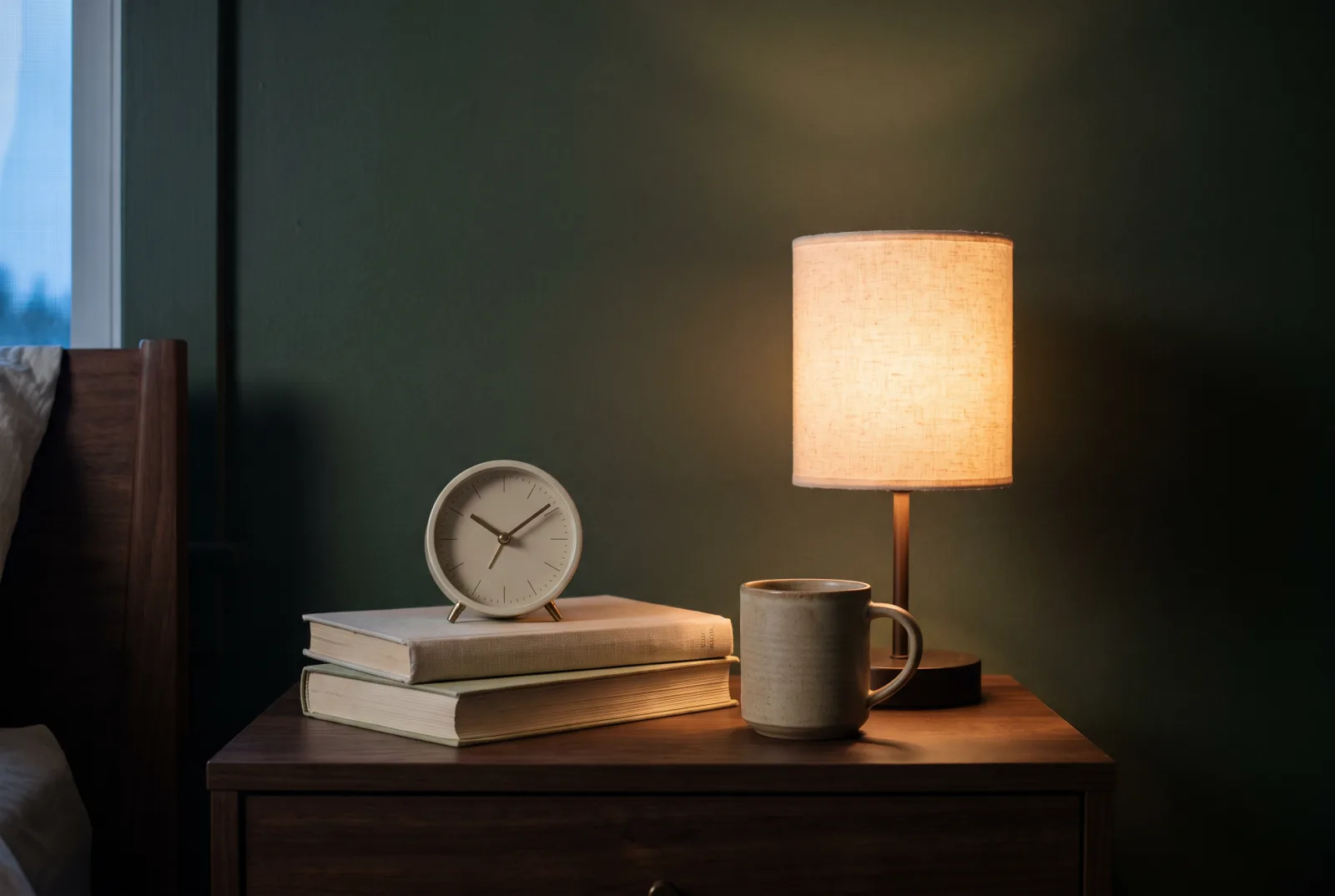
Boring works
Sleep advice has developed a gadget problem. But the interventions with the deepest evidence base are the ones nobody can sell you: consistent timing, light management, a cool dark room, and caffeine discipline. They're the foundation of cognitive behavioural therapy for insomnia, the first-line clinical treatment, and they cost approximately nothing.
Most adults need somewhere around seven to nine hours. Chronic short sleep is linked to impaired glucose metabolism, higher blood pressure, weakened immune function, and blunted judgment about how impaired you actually are. That last one is the cruelest feature, since sleep-deprived people reliably rate themselves as fine.
Your clock runs the show
Two systems govern sleep. Sleep pressure builds the longer you're awake, driven by the accumulation of adenosine in the brain. And your circadian rhythm, a roughly 24-hour internal clock, decides when your body expects to sleep, releasing melatonin as its 'darkness soon' signal. Good sleep happens when both systems agree; most bad sleep is the two being pushed out of alignment.
The clock's most powerful setter is light. Bright morning light anchors it; bright evening light (overhead LEDs as much as phones) tells it the day isn't over and delays melatonin release.
The five levers
In rough order of payoff:
- Keep a consistent wake time, seven days a week, within about an hour. The wake anchor sets everything downstream.
- Get outside light within an hour of waking. Even ten minutes on a grey Canadian morning is far brighter than indoor lighting.
- Dim the house in the last hour before bed: lamps instead of overheads, screens dimmed or down.
- Cool, dark, quiet room. Around 18 °C suits most people, and blackout curtains and earplugs are cheap upgrades.
- Cut caffeine by early afternoon and be realistic about alcohol: it sedates you into sleep, then fragments the second half of the night.
If you can't sleep, don't lie there
Lying awake and frustrated trains your brain to associate the bed with being awake and frustrated. If you've been alert for what feels like 20-plus minutes, get up, keep lights low, do something quiet and dull, and return when drowsy. It feels counterproductive; it's a core clinical technique.
Common mistakes
Sleeping in on weekends feels like repayment but shifts your clock: a mini jet lag every Monday. Long or late naps drain the sleep pressure the night needs. And obsessing over tracker scores can itself become an insomnia trigger; researchers have a name for it, orthosomnia. The tracker works for you, not the reverse.
The bigger picture
Sleep is the pillar the others quietly bill their hours to. It's when muscle repairs and memory consolidates, and when appetite hormones reset. Short sleep measurably increases hunger and tilts food choice toward exactly the ultra-processed stuff you're trying to eat less of. Fix sleep first and the rest of the project gets easier.