
The gap nobody advertises
Life expectancy in Canada sits in the low 80s. Health-adjusted life expectancy, the years lived in good health, is roughly a decade shorter. That gap is where the modern endgame happens: years lived with chronic disease, shrinking mobility, and expanding pill organizers. Lifespan tells you when the story ends; healthspan tells you how much of it you'd actually want to live.
Framed that way, the goal of this entire site sharpens: not maximizing the number on the tombstone, but compressing that final unhealthy decade into the smallest window biology allows. Researchers call it the compression of morbidity, an idea proposed by physician James Fries in 1980. It has aged better than most health ideas from 1980.
Two curves, two lives
Picture function on a graph across a life. One curve declines gently from 50 onward, sliding through two decades of accumulating limitation. The other stays high (hiking at 75, lifting at 80), then drops steeply near the end. Both lives can be the same length. Almost everyone, asked plainly, wants the second curve; almost all health marketing quietly sells inputs to the first question ('live longer') instead.
The good news: the interventions that extend life and those that extend health are largely the same list. Thinking in healthspan changes what you emphasize, and when.
What actually ends independence
Longevity culture obsesses over dying; healthspan thinking obsesses over what makes living difficult. The usual culprits are mundane and mostly trainable: losing the strength to rise from a chair, the balance to avoid a fall, the aerobic capacity to climb stairs, the hip fracture that starts a cascade. Cognitive decline and social isolation round out the list, and both are also influenced by fitness, sleep, and engagement.
Make it practical
Healthspan thinking means training for the person you'll be at 80:
- Build physical reserve now. Muscle, bone density, and aerobic capacity all decline from whatever peak you establish, so raise the peak.
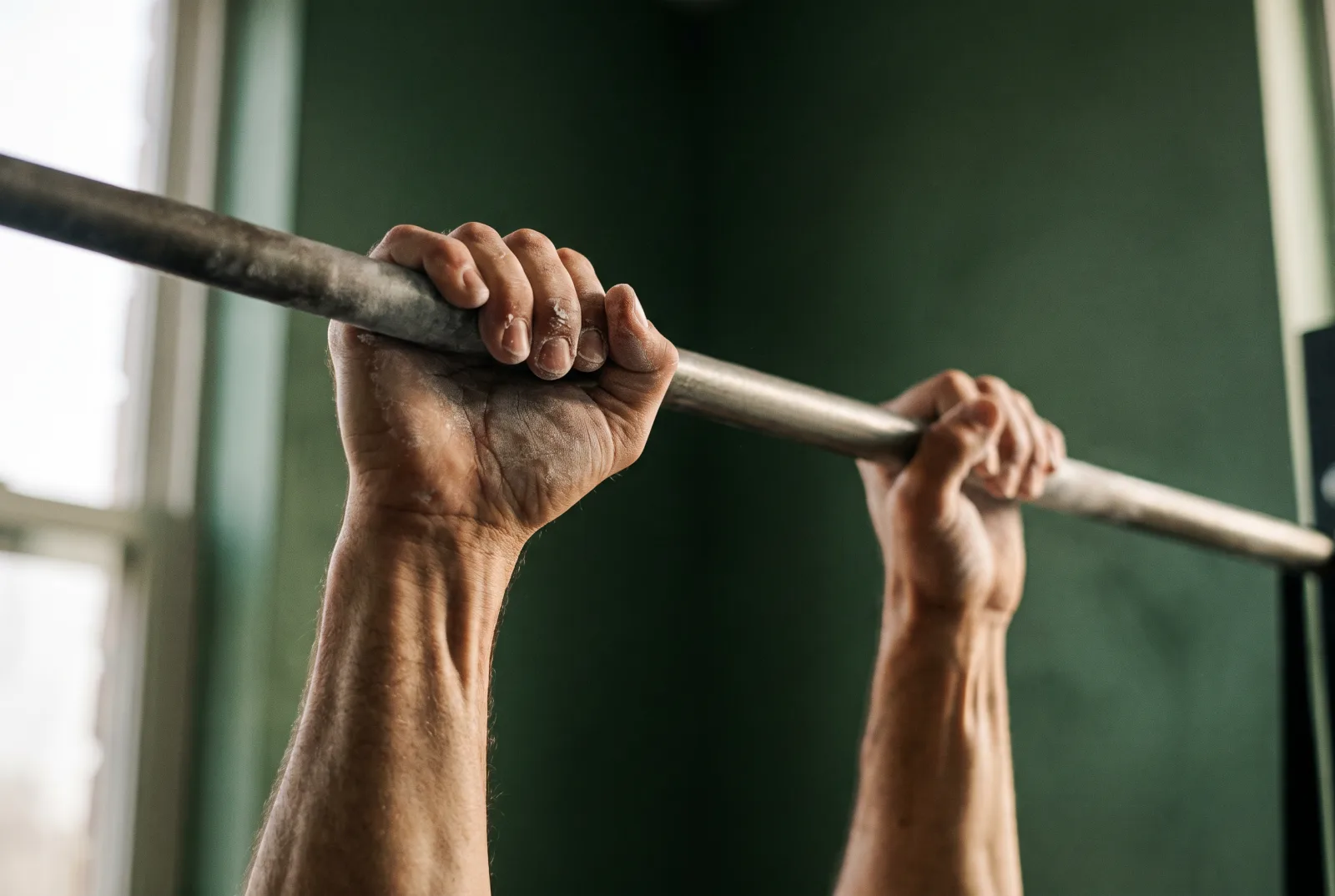
- Prioritize the capacities that gate independence: leg strength, grip, balance, and the ability to get off the floor.
- Treat sleep and blood pressure as long-horizon investments, not daily comforts.
- Don't neglect the non-biological pillars: strong social connection is one of the more consistent correlates of healthy aging.
- Use the 80-year-old test on any health decision: does this help the person I'll be, or just the person I am this quarter?
Common mistakes
The classic is treating biomarkers as the goal rather than proxies. A perfect lipid panel in a body that can't carry its own luggage is a strange victory. The opposite error is fatalism: assuming decline is a fixed schedule. The variance in function among 75-year-olds is enormous, and much of it traces to decades of modifiable behaviour, not luck alone.
The bigger picture
Healthspan is the lens the rest of this site is written through. Muscle, VO2 max, sleep, and diet quality are the four biggest inputs to which curve you get. The guides that follow are just this idea, operationalized.