An organ in disguise
Muscle spent decades filed under aesthetics. It's better understood as your largest metabolic organ: the primary destination for the glucose in your blood, a major site of fat oxidation, and, during illness or injury, the body's protein reserve, broken down to fuel immune response and healing. When researchers track grip strength across large populations, it predicts mortality strikingly well, not because gripping matters but because it's a stand-in for total-body reserve.
The slow leak
Sarcopenia, the age-related loss of muscle mass and strength, is the leak in the account. Muscle mass declines gradually from midlife, but strength and especially power (force delivered quickly) fall faster, because aging preferentially thins the fast-twitch fibres and their motor neurons. Power is what catches you when you trip; its early exit is why falls become the hinge event of many people's ninth decade.
The compounding is the cruel part. Less muscle means harder movement, means less activity, means faster loss. Every hospitalization or enforced bed rest withdraws from the account at a shocking rate. Older adults can lose measurable leg muscle in days of immobilization. The account balance you carry into a crisis largely determines whether you bounce back or step down.
The reserve model
Here's the reframe that makes midlife training rational: you are not lifting for this year. You're setting the peak from which all future decline subtracts. Two people losing muscle at identical rates arrive at 85 in different bodies if one started the descent from a higher altitude. Building muscle at 45 is buying function at 80 at the best exchange rate you'll ever be offered. The same effort yields more adaptation now than it will later, though it yields adaptation at every age.
Make it practical
Funding the account takes two deposits, made regularly:
- Resistance train 2–3 times weekly, prioritizing lower body and compound movements. Legs are where longevity lives.
- Include some intentionally fast movement against light load (quick sit-to-stands, medicine-ball throws) to train power, not just strength.
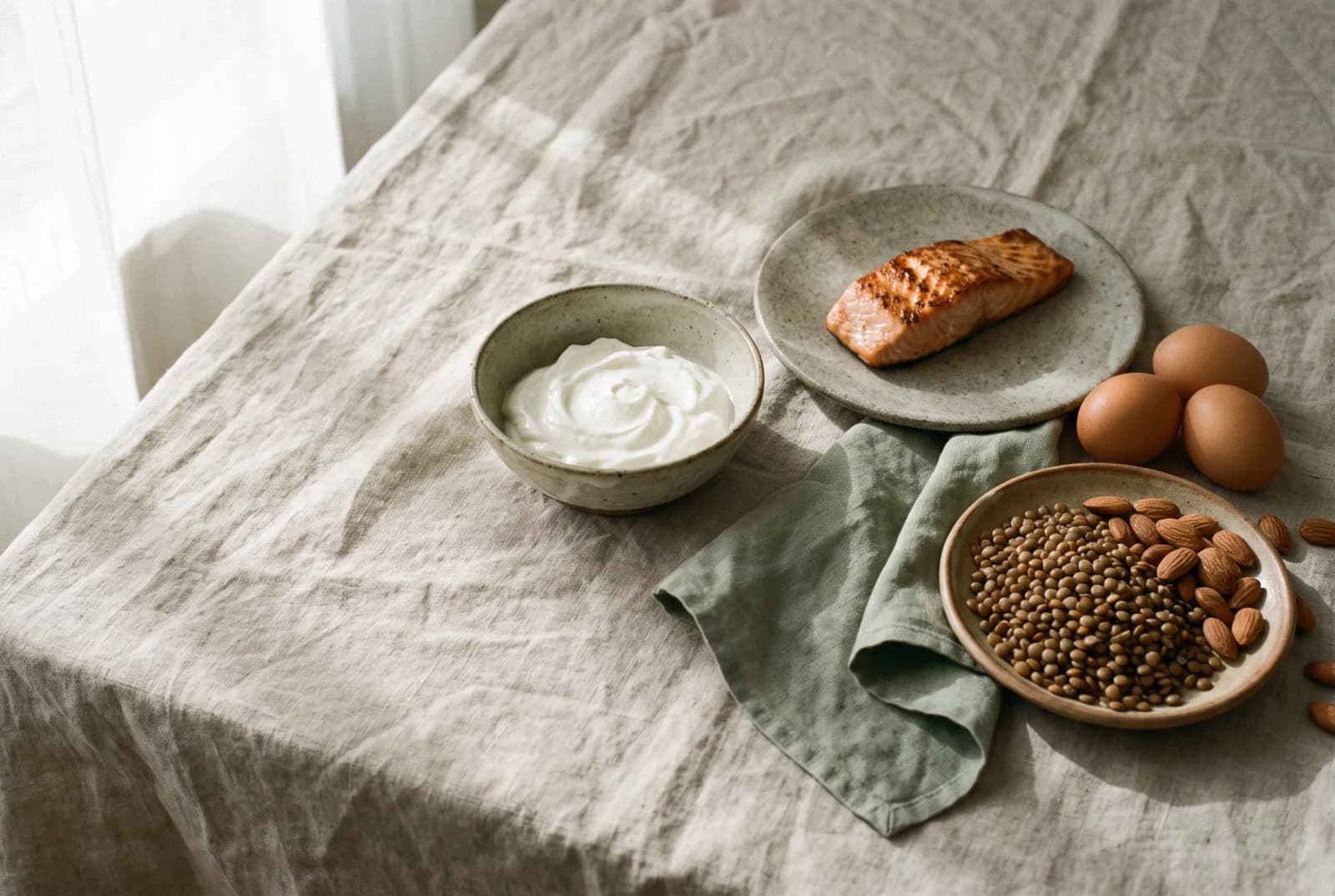
- Eat 1.2–1.6 g of protein per kg of body weight daily, distributed across meals.
- Protect the account during disruptions: even short daily bodyweight work during travel or illness recovery dramatically slows losses.
- Track function, not just weight: chair stands in 30 seconds, grip, single-leg balance time. These are your account statements.
Common mistakes
Judging progress by the bathroom scale is the big one. Muscle gain with fat loss can read as nothing happening on a device that measures neither. Another is the cardio-only retirement plan: aerobic work is essential but does not meaningfully defend fast-twitch fibre. And starting too late isn't a thing; trials in nursing-home residents in their 90s produced significant strength gains.
The bigger picture
Muscle sits at the intersection of every pillar: built by training, funded by protein, repaired during sleep, and cashed out across the healthspan curve. If this site had to be compressed to one physical instruction, 'keep your muscle' would be on the shortlist.