The quiet shift that starts in midlife
Somewhere in your 40s, your muscle stops listening as closely. The same chicken breast that once triggered a strong wave of muscle protein synthesis now produces a smaller response. Researchers call this anabolic resistance, and it's one of the reasons adults can lose a meaningful fraction of their muscle mass per decade after midlife if they do nothing about it.
The fix is not exotic. Eat enough protein, spread it across the day, and lift. But enough is probably more than you think, and more than the minimum recommended intakes were ever designed to deliver.
What the evidence says
The standard recommended intake (0.8 g per kg of body weight per day) was set to prevent deficiency, not to help you age well. Research in older adults consistently points higher: roughly 1.2–1.6 g/kg/day for healthy people trying to preserve muscle, and sometimes more for those training hard or losing weight.
Trials combining higher protein with resistance training show better retention of lean mass, strength, and function than either alone. Neither replaces the other. Protein without training is raw material with no work order; training without protein is a work order with no materials.
| Daily protein | What it was set for | |
|---|---|---|
| Standard recommendation | 0.8 g per kg of body weight | Preventing deficiency |
| Healthy older adults preserving muscle | 1.2 to 1.6 g per kg | Offsetting anabolic resistance |
| Training hard or losing weight | Sometimes more | Protecting lean mass under extra demand |
| Per meal | 25 to 40 g, three to four times a day | Reaching the leucine threshold each time |
Why distribution matters
Muscle protein synthesis works like a threshold switch. A meal needs enough protein, particularly the amino acid leucine, to flip it on, and older muscle needs a bigger dose to reach that threshold. A day that delivers 15 g at breakfast, 20 g at lunch, and 60 g at dinner flips the switch reliably only once.
Aiming for 25–40 g per meal, three to four times a day, gives each meal a fair shot at triggering synthesis. Breakfast is where most people fall short. Toast and coffee is essentially a zero.
Make it practical
You don't need powders or a food scale forever. You need a rough count and a few defaults.
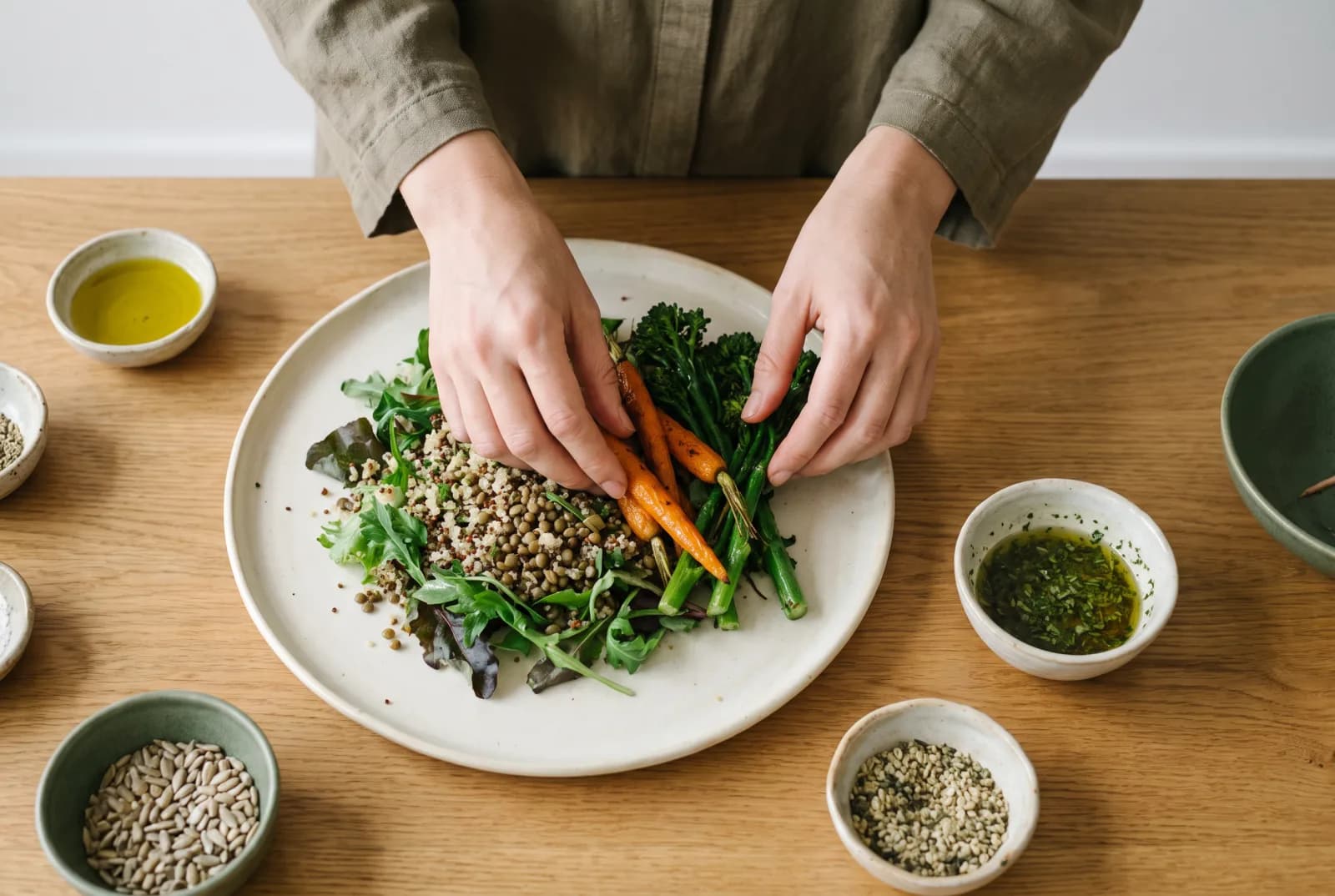
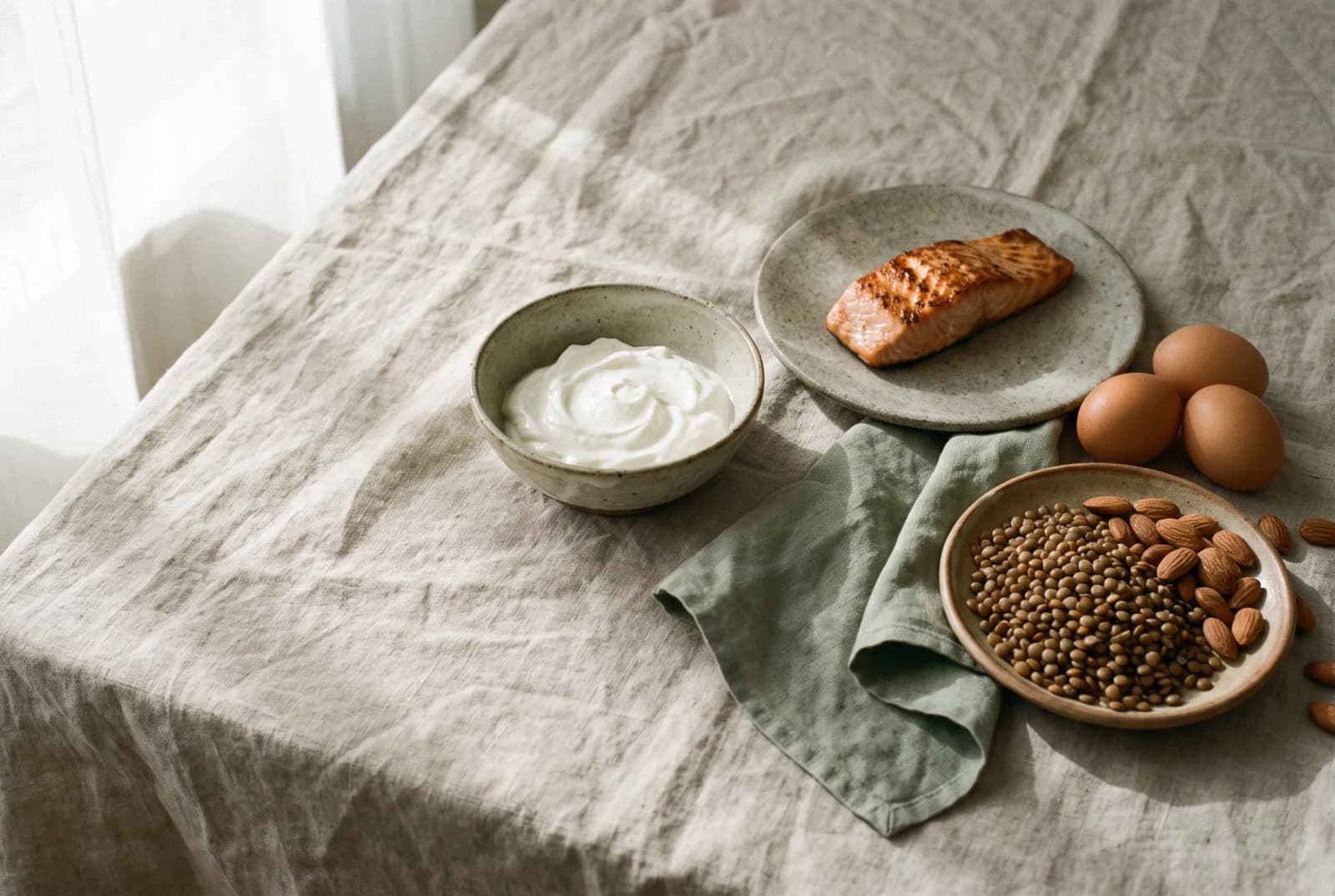
- Anchor every meal with a palm-sized (or larger) portion of protein: eggs, Greek yogurt, fish, poultry, tofu, tempeh, lentils, lean meat.
- Fix breakfast first. Greek yogurt with nuts, eggs, or leftover dinner all beat toast.
- Estimate your target: body weight in kg × 1.2–1.6. For a 75 kg adult, that's roughly 90–120 g/day.
- Track for one ordinary week to calibrate your eye, then stop tracking.
- If appetite is small, eat the protein portion of the plate first.
Common mistakes
The biggest one is assuming a high-protein label means much. A granola bar with 8 g of protein is a candy bar with a gym membership. The second is fearing that protein harms healthy kidneys. The evidence doesn't support that concern in people without pre-existing kidney disease, though anyone with kidney conditions should work with their physician.
The bigger picture
Protein is the nutrition arm of a larger project: keeping muscle, which is one of the strongest physical predictors of how well you age. Pair it with strength training and decent sleep (the hormonal environment for building muscle is set overnight) and each habit makes the others work better.
Sources
- Evidence-Based Recommendations for Optimal Dietary Protein Intake in Older People: A Position Paper From the PROT-AGE Study Group. Journal of the American Medical Directors Association, 2013.