
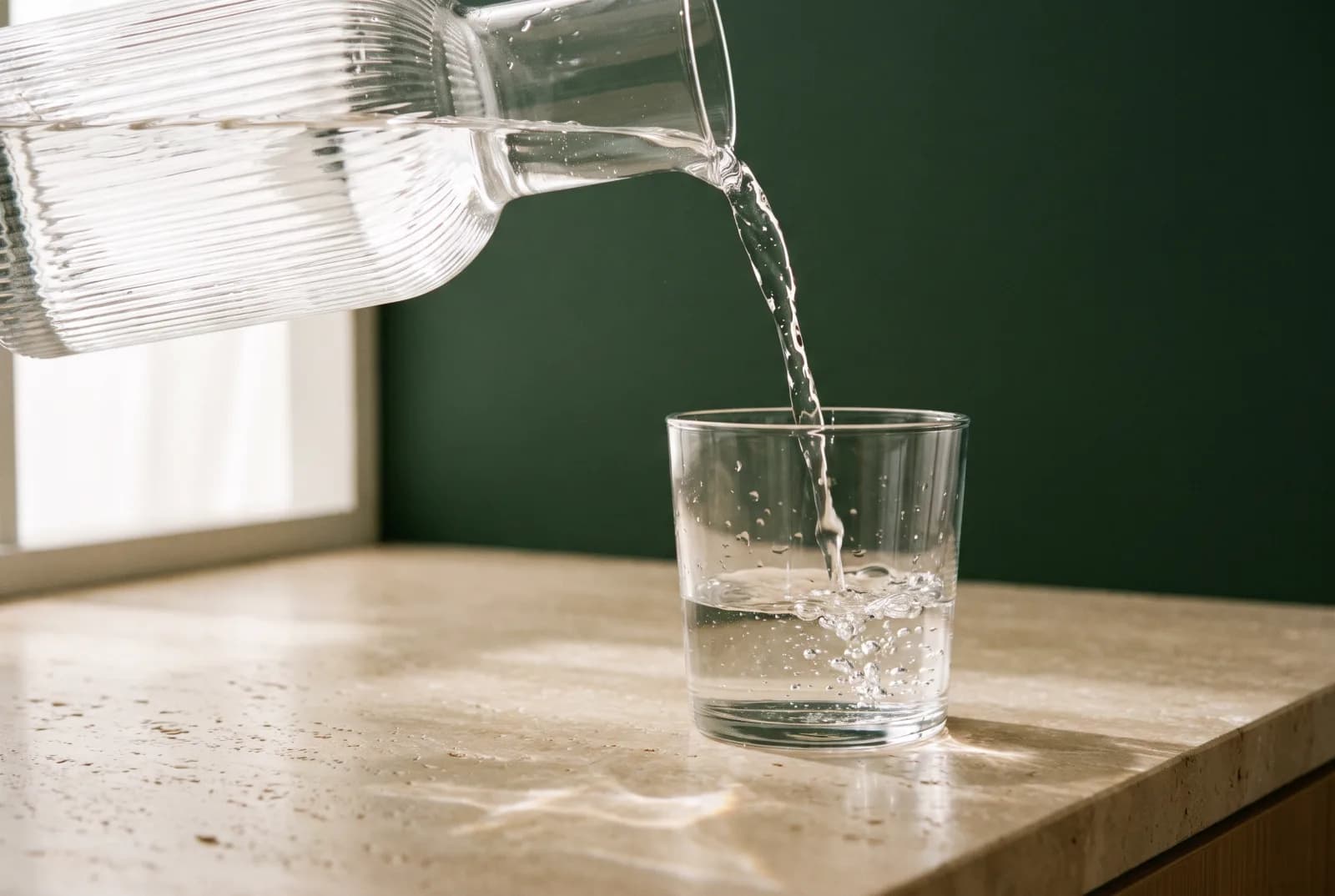
The myth of mass dehydration
The claim that most people walk around chronically dehydrated doesn't survive contact with physiology. Your kidneys and your thirst mechanism regulate body water within a narrow band, and they're very good at it. The famous 'eight glasses a day' rule has no solid scientific origin, and food already supplies a meaningful share of your daily fluid.
For most healthy adults in ordinary conditions, drinking to thirst, with water as the default beverage, is adequate. The interesting questions are about the exceptions.
Who actually needs to pay attention
Thirst gets less reliable with age, so older adults can drift into mild dehydration without feeling it. Hard exercise, especially in heat, can outpace casual drinking. Some medications, illness with fever or GI losses, and long flights all raise needs. And people with a history of kidney stones benefit from deliberately higher fluid intake; that's one of the few areas where drinking beyond thirst has clear evidence behind it.
A simpler dashboard
Forget counting litres. Your body publishes a status report several times a day: urine colour. Pale straw means you're fine. Dark amber means drink. Completely clear all day means you can ease off.
- Default to water, and keep it visible on your desk. Proximity drives intake more than intention.
- Drink to thirst, and add a glass with each meal as a floor.
- Around exercise: a few hundred millilitres before, sips during if it's long or hot, and rehydrate after. Salty food with fluid works better than plain water after heavy sweating.
- If you're over 65, build light structure (a glass on waking, one with each meal) rather than trusting thirst alone.
- Coffee and tea count toward fluid intake. Moderate caffeine is not meaningfully dehydrating.
Can you overdo it?
Yes, and it matters. Drinking large volumes of plain water quickly, especially during long endurance events, can dilute blood sodium. Exercise-associated hyponatremia is rare but dangerous, and it's caused by overdrinking, not underdrinking.
The bigger picture
Hydration's biggest healthspan contribution may be what water displaces: sugary drinks are among the most consistently harmful items in the diet literature, and every glass of water taking their place is a quiet win. Cold water also happens to be free, which is more than the electrolyte-powder industry can say.
Sources
- Statement of the Third International Exercise-Associated Hyponatremia Consensus Development Conference. Clinical Journal of Sport Medicine, 2015.