
The unsexy standout
No one has ever built an influencer career on fibre. And yet when large reviews pool the data on dietary habits and long-term health, fibre intake keeps landing near the top: higher intakes are consistently associated with lower risk of cardiovascular disease, type 2 diabetes, colorectal cancer, and death from any cause. The relationship is dose-dependent across the ranges most people could realistically eat. More fibre, lower risk.
Most adults in Canada and similar countries eat somewhere around half of the commonly recommended 25–38 g per day. That gap is one of the cheapest health opportunities available.
What fibre actually does
Fibre is the part of plant food your own enzymes can't digest, which sounds like a flaw and is actually the point. Soluble fibre forms gels that slow glucose absorption and bind cholesterol-carrying bile acids. Insoluble fibre adds bulk and keeps things moving. And fermentable fibre feeds your gut microbes, which convert it into short-chain fatty acids like butyrate, compounds that fuel the cells lining your colon and appear to influence inflammation and metabolic health well beyond the gut.
In effect, fibre is less a nutrient for you than a nutrient for the trillions of microbes you're hosting. Feed them well and they pay rent.
Make it practical
You don't need supplements or a spreadsheet. You need swaps and additions to meals you already eat.
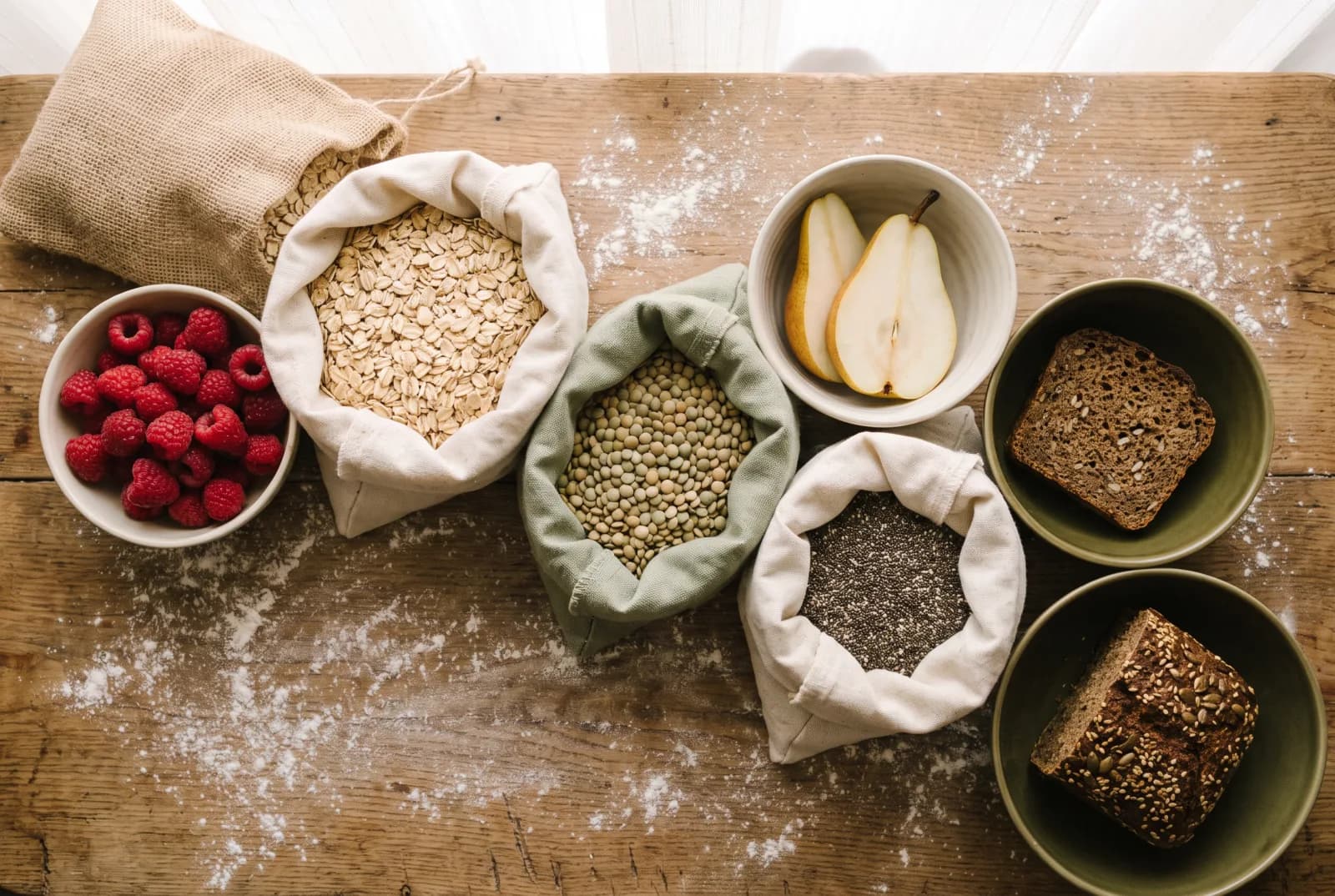
- Add legumes twice a week to start: lentils in soup, chickpeas in a salad, beans in chili. Legumes are the densest common fibre source.
- Swap refined grains for intact ones: oats over flakes of nothing, whole-grain bread, brown rice or barley.
- Eat the fruit instead of drinking it. Juicing removes most of the fibre.
- Leave edible skins on: potatoes, apples, pears, cucumbers.
- Add a handful of nuts, seeds, or berries to whatever breakfast you already eat.
The ramp-up rule
The most common reason people abandon a high-fibre push is going from 12 g to 35 g in a weekend and spending the week regretting it. Bloating and gas are your microbiome adjusting to a new food supply, not a sign of intolerance.
Common mistakes
Relying on fibre-fortified snack bars is the big one. They deliver isolated fibres without the food matrix and variety that whole plants provide, and the evidence base is built on the whole-food version. Variety matters too: different fibres feed different microbes, so twenty plant foods a week beats the same bran cereal daily.
The bigger picture
Fibre is a pattern-level habit: it comes packaged with the vegetables, legumes, and whole grains that define a good plate, and it displaces the ultra-processed foods that define a poor one. Get fibre right and much of the rest of your diet has quietly improved itself.